Eco-Friendly Team Shirts: Sustainable Printing Options
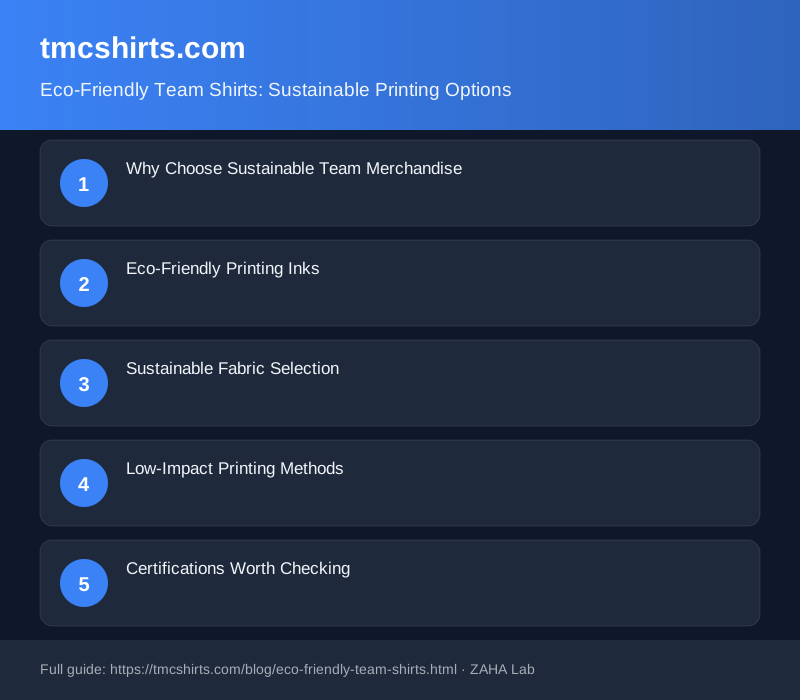
Many teams now prioritize environmental responsibility alongside brand visibility. Eco-friendly custom team shirts combine sustainability with professional appearance, using plant-based inks, organic cotton, and low-impact printing methods to reduce your team's carbon footprint.
Why Choose Sustainable Team Merchandise
Printed team apparel typically involves chemical-heavy production processes. Switching to eco-friendly options cuts water usage, chemical waste, and carbon emissions without compromising print quality or durability. Teams report that sustainable shirts strengthen brand reputation, particularly with younger members and environmentally conscious organizations.
Sustainable printing costs only marginally more than conventional methods, often just 5-15% extra depending on volume and fabric choice. For corporate teams and event organizers, this represents a meaningful way to demonstrate environmental commitment.
Eco-Friendly Printing Inks
Plant-based and soy inks replace petroleum-derived alternatives on many team shirt orders. These inks produce vibrant colours, wash durably, and break down more readily in landfill. Water-based inks, common in DTG printing, use significantly less chemical solvent than plastisol alternatives and emit fewer volatile organic compounds during production.
Reactive dyes used in sublimation printing bond directly to fabric molecules, reducing excess chemical runoff. Request low-impact dye processes when ordering large team quantities to access these options.
Sustainable Fabric Selection
Organic cotton eliminates synthetic pesticides and uses substantially less water than conventional cotton. Many teams choose 100% organic cotton blanks for their superior environmental profile and soft feel. GOTS (Global Organic Textile Standard) certification guarantees third-party verification of organic claims.
Recycled polyester blends recover post-consumer plastic and reduce landfill burden. These fabrics perform excellently for active teams, offering moisture-wicking properties comparable to virgin polyester whilst cutting manufacturing emissions by 40-50%.
Low-Impact Printing Methods
DTG printing applies ink directly to fabric, eliminating screen and squeegee waste. This method uses water-based inks and produces zero excess chemical runoff, making it ideal for small runs or complex multi-colour designs. Screen printing remains environmentally viable when using water-based inks and proper chemical disposal, particularly for large orders where efficiency matters.
Sublimation printing leaves zero residual dye and uses no water, though it requires synthetic polyester blends. Heat transfer methods have improved substantially, with new eco-formulations reducing plastic waste from traditional plastisol-based transfers.
Certifications Worth Checking
Look for GOTS certification on organic cotton blanks, OEKO-TEX Standard 100 on fabric safety, and FSC certification on recycled paper packaging. These labels indicate rigorous environmental and social standards.
FAQ
Do eco-friendly team shirts feel different?
Organic cotton and recycled polyester often feel softer and perform similarly to conventional fabrics. Many teams prefer the comfort. Durability and wash resistance match standard options when printed using modern eco-inks.
How much more expensive are sustainable options?
Expect 5-15% premium above standard pricing for organic cotton and low-impact inks. Bulk orders above 50 units minimize per-unit cost increases significantly.
Can I use complex designs with eco-friendly inks?
Yes. DTG printing handles unlimited colours and photo-quality detail with water-based inks. Screen printing with water-based inks works best for simpler designs; consult your printer on multi-colour capability.
Will eco-friendly prints fade faster?
No. Modern plant-based and water-based inks perform identically to conventional alternatives in wash tests. Proper care using cold water and gentle cycles ensures longevity.
What packaging should I request?
Request FSC-certified cardboard boxes and avoid plastic wrapping. Many suppliers now offer paper-based alternatives as standard on sustainability-focused orders.
Related Products
We include affiliate links to products we recommend. We may earn a small commission if you purchase through these links at no extra cost to you.