T-Shirt Weight Guide for Custom Team Printing
Affiliate disclosure: some links in this article are affiliate links. TMC Shirts may earn a small commission if you purchase through them, at no extra cost to you.
Most complaints about bulk team shirt orders trace back to fabric weight, not the print or the colours. By the time you notice, the shirts are already pressed and packed.
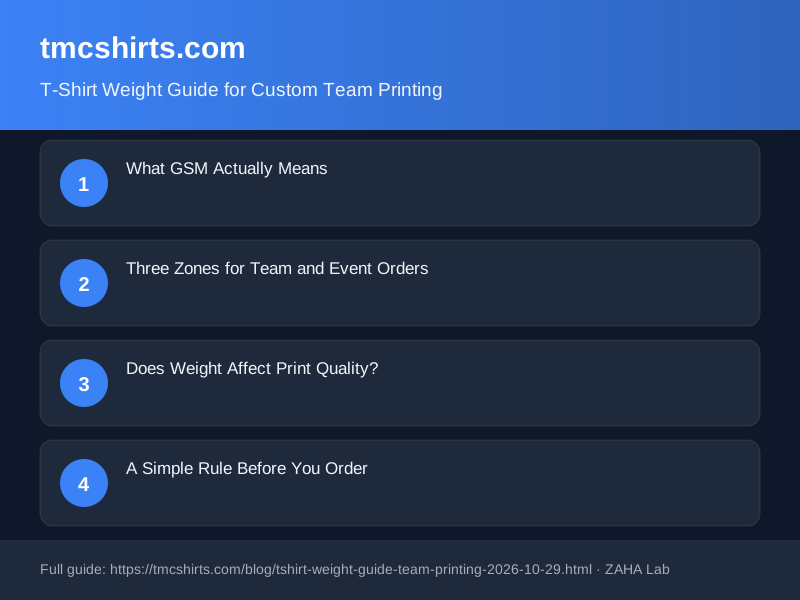
What GSM Actually Means
GSM stands for grams per square metre. It measures fabric density. Higher numbers mean thicker, heavier material. The figure affects durability, drape, and how cleanly a printed design sits on the surface.
A 140gsm shirt feels thin. Fine for a single-day charity walk where price per unit matters more than longevity. A 220gsm shirt feels close to a quality retail garment. That density is overkill for a football kit washed twice a week.
Three Zones for Team and Event Orders
Lightweight (140-165gsm) suits summer events, fun runs, and one-day giveaway shirts. The Fruit of the Loom Valueweight T-Shirt sits at 165gsm and is a popular blank for single-day events across the UK. You get a softer feel and lower cost per unit, with less structure and slightly more transparency on pale colourways.
Mid-weight (165-190gsm) is where most team orders land. The Gildan 5000 Heavy Cotton T-Shirt at 185gsm is the standard blank for school sports kits, volunteer crews, and charity teams. It prints cleanly with screen and heat-transfer methods alike and holds its shape after 40 washes. Nearly every UK print shop carries it in stock.
Heavyweight (190gsm+) suits corporate gifts, premium event merchandise, and anything worn regularly outside of sport. The Gildan Softstyle 64000 uses ring-spun cotton that feels denser than its 150gsm weight suggests. It is the right call for branded merchandise where the shirt itself forms part of the impression on the wearer.
Does Weight Affect Print Quality?
Yes, directly. Screen-printing inks sit on the surface, so a tighter weave produces sharper edges and more accurate colour matching. DTG printing absorbs ink into the fibres, so it performs best on 100% cotton mid-weights where the surface is even and consistent. Fine text and multi-colour gradients both benefit from 180gsm or above.
A Simple Rule Before You Order
One-day event with a tight budget: go lightweight. Weekly training kit or volunteer uniform: mid-weight. Premium gift or merchandise sold at events: heavyweight. When in doubt, order a single sample blank in your chosen colour before committing to 50 or 100 shirts. Most UK printers supply a blank sample for under two pounds, which is cheap insurance against an expensive misjudgement.
FAQ
What is the best GSM for charity event t-shirts?
For a single-day event, 140-165gsm is usually sufficient. It keeps unit costs down, prints well for bold logo designs, and participants are unlikely to wash the shirt more than once or twice. If the shirt is intended as a keepsake or is part of a fundraising pack, move up to 180gsm for a better-quality feel.
Will a heavier t-shirt shrink more in the wash?
Not necessarily. Shrinkage depends more on whether the fabric is pre-shrunk than on weight alone. Most major blanks, including the Gildan 5000 and Fruit of the Loom Valueweight, are pre-shrunk at the mill. Always check the product specification before ordering in bulk, and factor a 3-5% shrink allowance into your sizing mix regardless.
Does fabric weight affect screen-printing results?
Yes. Heavier fabrics have a tighter, more consistent weave, which gives screen-print inks a firmer surface and produces sharper edges on fine lines. Very lightweight fabrics can allow ink to bleed slightly around intricate detail work. For anything with text under 14pt or fine line art, choose 180gsm or above.
Can I mix different fabric weights in the same team order?
You can, but most printers prefer a single blank style per run to keep print settings consistent across the batch. If you genuinely need two styles, such as a lightweight version for junior players alongside a standard kit for adults, place them as separate orders to avoid setup complications and potential colour inconsistencies.
What is the difference between Gildan 5000 and Gildan Softstyle for team shirts?
The Gildan 5000 is open-end spun cotton at 185gsm: durable, cost-effective, and built for printed workwear and sports kits that take regular punishment. The Softstyle (64000) is ring-spun at 150gsm with a noticeably softer hand feel and a slimmer fit. Choose the 5000 for utility and the Softstyle for premium merchandise, event gifts, or any situation where comfort and presentation matter equally.