Screen Printing vs DTG for Team T-Shirts
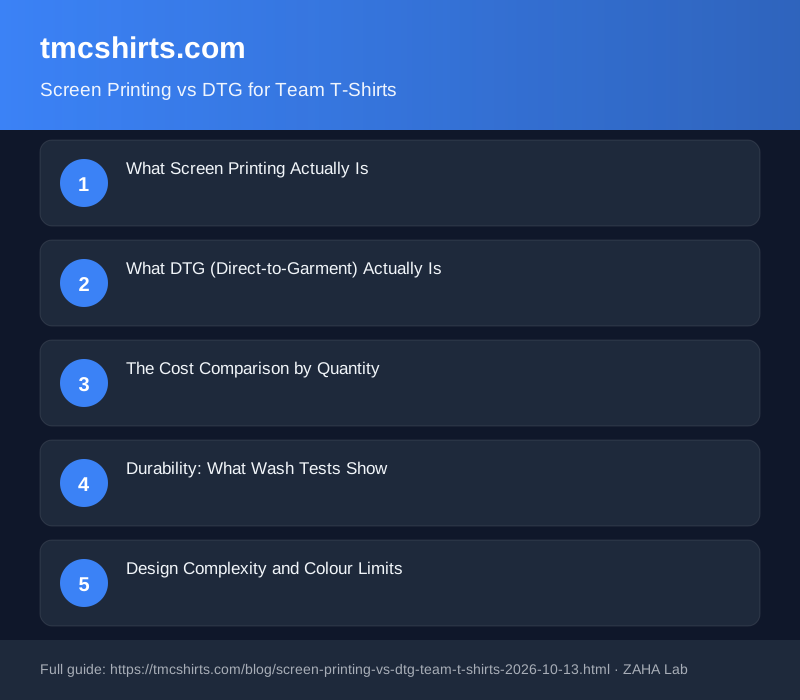
Most teams ordering their first batch of custom shirts end up paying 25-40% more than necessary because they chose the wrong print method for their quantity. The answer is straightforward once you know two numbers: how many shirts and how many colours in the design.
What Screen Printing Actually Is
Screen printing forces ink through a fine mesh stencil onto the fabric. Each colour in the design requires a separate screen, which is why there is a setup charge before a single shirt is printed. Once those screens are made, the cost per additional shirt falls quickly. A two-colour chest logo for a football squad of 20 typically costs around £7-9 per shirt from a UK printer. The same job for 100 shirts often comes in under £4 per shirt.
The ink bonds to the surface of the fabric under heat. On a quality 100% cotton blank like the Gildan 5000 Heavy Cotton T-Shirt, a correctly cured screen-print survives 50-plus machine washes at 40°C without cracking, peeling, or losing significant colour intensity. That matters when a sports team wears the same shirt every training session.
Screen printing also produces a slightly raised, tactile feel on the garment. Many people associate this with quality. For simple, bold artwork, the vibrancy of screen ink on cotton is hard to match.
What DTG (Direct-to-Garment) Actually Is
DTG works like a wide-format inkjet printer, except the garment is laid flat on a platen and the print head passes directly over it. There are no screens to produce and no setup charge. That means you can print one shirt for roughly the same per-unit cost as ten. A single custom shirt via DTG typically costs £18-25 from a UK supplier depending on size and design complexity.
The ink soaks into the fibres rather than sitting on top. On white and light-coloured shirts, modern DTG machines produce clean, detailed results with smooth gradients. On dark fabrics, the printer first lays down a white underbase layer. That adds cost and can produce a slightly stiffer hand-feel until the shirt has been washed a couple of times.
DTG handles unlimited colours at no extra charge. A full-colour team photograph, a photorealistic badge, or a design with 15 shades is straightforward to print via DTG and would be impractical via screen printing. For most team and event designs though, that flexibility is not needed.
The Cost Comparison by Quantity
These figures reflect typical UK trade prices for a single front chest print. Your actual quote will vary by supplier, blank choice, and number of print positions.
| Order quantity | Screen print (2 flat colours) | DTG (full colour) |
|---|---|---|
| 1 shirt | Not practical (setup cost ~£40-60) | £18-25 |
| 10 shirts | £11-14 per shirt | £16-18 per shirt |
| 25 shirts | £7-9 per shirt | £13-16 per shirt |
| 50 shirts | £5-6.50 per shirt | £11-13 per shirt |
| 100 shirts | £3.50-4.50 per shirt | £9-11 per shirt |
The crossover point sits consistently around 10-12 shirts. Below that threshold, DTG costs less. Above it, screen printing pulls ahead, and the gap widens significantly as quantity increases.
Durability: What Wash Tests Show
Screen-printed designs on pre-shrunk 100% cotton tested at 40°C show no significant cracking or colour loss after 60 washes. The ink layer is thick and fully bonded. DTG on the same garment shows measurable fading by wash 20-30 on dark fabrics, though on pale shirts results are considerably better. Modern water-based DTG inks have improved in the last three years, but screen printing still leads on durability at every price point.
For a one-day charity run where the shirt is worn once and kept as a keepsake, DTG durability is entirely adequate. For a weekly five-a-side league or a company uniform worn three times a week, screen printing is the practical choice. The Fruit of the Loom Original T-Shirt is a solid mid-weight blank that holds screen-printed ink well and is widely available for bulk orders in the UK.
Design Complexity and Colour Limits
Screen printing becomes expensive above 5-6 colours. Each additional colour requires a separate screen, adding roughly £20-50 in setup per colour. Gradients, soft shadows, and photographic images are very difficult to reproduce accurately.
DTG has no such constraints. Photographic detail, subtle gradients, and complex multi-colour badges reproduce faithfully. However, the overwhelming majority of team and event designs use 1-3 flat colours (a club badge, a sponsor name, an event date) and therefore never hit the screen-printing colour ceiling.
One practical hybrid approach: screen-print the bulk team order and DTG a small run of personalised variants, such as a manager's shirt with a name or a limited commemorative edition with photographic artwork. Several UK printers, including TMC Shirts, handle both methods on a single order.
Turnaround Times
Screen printing requires screen production before a single shirt is printed. Add 2-3 extra working days for that step. Most UK suppliers quote 7-10 working days for a screen-print order under normal workload. Rush service is available, typically for a 30-50% surcharge.
DTG skips the setup stage entirely. Small orders often ship within 2-4 working days. If you have left it to the week before an event, DTG is the realistic option for quantities up to about 30 shirts. Above that, the printing time itself (roughly 3-5 minutes per shirt for a full-colour chest design) makes large last-minute DTG orders impractical.
Which Should You Choose?
Choose screen printing when your order is 12 or more identical shirts, the design uses four or fewer flat colours, the shirts will be washed and worn repeatedly, and you have at least seven working days before you need them.
Choose DTG when you need fewer than 12 shirts, the artwork is photographic or uses gradients, the shirt is a one-off gift or commemorative item, or your deadline is within four working days.
If you are unsure which blank to use for DTG with fine artwork, a lighter ring-spun option like the Gildan Softstyle T-Shirt offers a smoother printing surface than heavier cotton and handles detail reproduction well on pale colourways.
FAQ
What is the minimum order for screen printing in the UK?
Most UK printers set a minimum of 10-12 shirts for screen printing. Below that, the screen setup cost makes the per-unit price uncompetitive with DTG. A small number of specialist shops accept 6-shirt minimums, but prices at that quantity are significantly higher. If you need fewer than 10 shirts, DTG is the practical route.
Does fabric type affect which printing method I should use?
Yes. Screen printing and DTG both perform best on 100% cotton or a high-cotton blend. Polyester and synthetic fabrics are problematic for both methods: DTG inks do not bond well with polyester, and screen printing on a slippery synthetic surface risks poor adhesion. For polyester team sportswear, dye sublimation is a better option entirely.
How do I prepare my artwork for screen printing?
Supply a vector file (AI, EPS, or SVG) with each colour on a separate layer and all fonts converted to outlines. If you only have a raster file (JPEG or PNG), ask your printer whether they offer artwork separation or redrawing services. A minimum of 300 dpi at print size is the baseline for raster artwork, though vector is strongly preferred for clean, scalable results.
Can I mix screen printing and DTG on the same order?
Some printers allow split orders, for example 50 screen-printed team shirts plus 5 personalised DTG variants for staff or management. Expect a small handling surcharge for the additional setup. Check with your supplier before finalising the order, as not all print shops run both methods in-house.
Will screen-printed shirts shrink after washing?
A quality pre-shrunk blank like the Gildan 5000 will shrink minimally if washed at 40°C or below and tumble dried on a low setting. The print itself will not shrink, but non-pre-shrunk blanks can tighten by half a size or more on first wash. Always confirm with your supplier that the garment has been pre-shrunk at the mill before placing a large order.
Affiliate disclosure: this article contains sponsored links. TMC Shirts may earn a small commission if you purchase through them, at no additional cost to you.