How Many Custom T-Shirts for Your Team Event
Ordering custom t-shirts for your team event sounds simple until you face a blank screen asking "quantity." Order too few, and half your team goes without. Order too many, and you're storing boxes in the office for months.
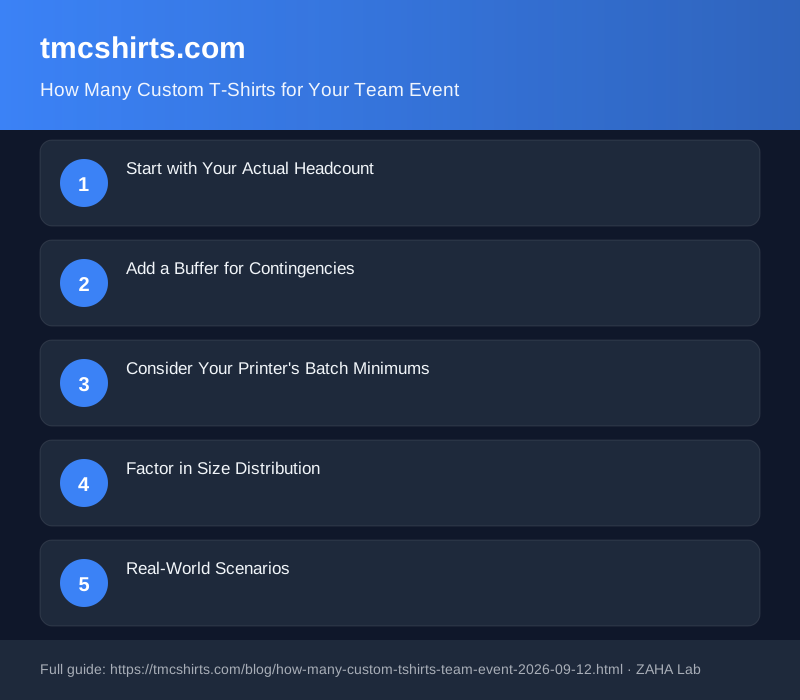
Start with Your Actual Headcount
The foundation of any order is knowing who's attending. This sounds obvious, but many organisers skip this step and guess. Don't. Send a quick registration form or Slack poll asking attendees to confirm. You'll avoid wasting budget on no-shows.
If your event is internal (all-staff team day, department outing), pull your latest HR headcount. If it's open to external guests—clients, partners, or networking events—ask invitees to RSVP at least 3 weeks ahead. This gives you a concrete number to work from.
Add a Buffer for Contingencies
Life happens. Someone forgets their size, a shirt tears on the first day, a last-minute team member shows up, or a guest plus-one joins without warning. Printers recommend a 10–15% buffer above your confirmed headcount.
For a team of 80, that's 8–12 extra shirts. For a team of 50, it's 5–8 extra. This buffer is cheap insurance and usually sells quickly to team members who want spares or souvenirs.
Consider Your Printer's Batch Minimums
Most UK printers work with batch minimums: 50, 100, or 250 units. Your final order must fit these thresholds. If you've calculated 67 shirts needed, you'll likely round up to 100. If it's 87 shirts, you might stick with 100 rather than jump to 150.
Check your printer's custom t-shirt pricing and minimum order quantities early in your planning. Costs per shirt drop significantly at higher volumes—50 units often costs more per shirt than 100—so rounding strategically can sometimes save money overall.
Factor in Size Distribution
You're not ordering a single generic size; you're ordering XS, S, M, L, XL, and XXL. Skew your order towards the middle sizes (M, L) unless your team data suggests otherwise. A typical corporate team splits roughly:
- XS / S: 15–20%
- M: 25–30%
- L: 25–30%
- XL: 15–20%
- XXL+: 5–10%
Use a size survey in your registration form. If 30% of respondents pick L, order approximately 30% of your final quantity in L. This prevents left-over piles of unwanted sizes.
Real-World Scenarios
Small Team Event (20–30 people)
Confirmed: 25 people. Buffer (+15%): 28–29 shirts. Printer minimum: 50 units. Order: 50 shirts. You'll have 20–25 spares for extra keepsakes and size mishaps.
Mid-Sized Department (60–80 people)
Confirmed: 70 people. Buffer (+12%): 78–80 shirts. Printer minimum: 100 units. Order: 100 shirts. Twenty extras absorb changes and last-minute guests.
Large Company Event (150+ people)
Confirmed: 180 people. Buffer (+10%): 198 shirts. Printer minimum: 250 units. Order: 250 shirts. Most teams of this size will absorb or gift the surplus within weeks.
Timing and Last-Minute Changes
Close your registration 3–4 weeks before the event. This gives your printer enough lead time (typically 2–3 weeks for standard single-colour prints) and you a final headcount to lock in.
After final registration closes, expect 10–15% last-minute changes—cancellations, size corrections, new attendees. This is why the buffer exists. If changes exceed your buffer, contact your printer immediately. Most offer rush services or fast reprints for a small upcharge, far cheaper than panic-ordering a second batch.
Storage and Leftover Inventory
You've ordered 100 shirts and distributed 75. What happens to the 25 remaining? Plan for this upfront. Options:
- Company store: Offer extras to employees at cost or a small markup. A simple online shop tool makes this frictionless.
- Future events: Store extras for next year's team outing, onboarding merchandise, or office giveaways.
- Charity donation: Many UK charities accept branded merchandise for resale fundraising.
- Staff incentives: Use them as rewards for team achievements or work anniversaries.
Avoid overstock guilt. A 10–15% buffer is industry standard and nearly always valuable to your organisation later.
FAQ
What if I'm still unsure of final attendance?
Order for your confirmed RSVPs plus buffer, then plan a secondary small reorder window. Most printers can print 10–20 additional shirts on short notice if needed. It's easier than warehousing hundreds of extras.
Should I account for employee turnover?
If your event is 6+ months away, yes—add 2–5% to your buffer for new hires. For events 1–3 months away, your current headcount is reliable enough.
Can I print different designs on the same order?
Yes, but it adds cost and complexity. Most UK printers charge per design setup. If you want multiple designs (e.g., team A vs team B), ask your printer whether one large order or two separate orders makes more financial sense.
What's the difference between ordering 50 and 100?
Usually £1–2 per shirt in savings at the 100-unit threshold, depending on print complexity. So 50 extra shirts might cost £50–100 more. Weigh this against the value of having extra inventory for future use.
How do I handle plus-ones or partner attendance?
Include them in your original registration estimate. If your form asks "how many attending," make it clear whether partners and guests are included. This avoids surprises and ensures you've ordered enough sizes.
Related Products
Size Measuring Tape
Help your team take accurate measurements for ordering. Reduces fitting errors and returns.
View on Amazon UKEvent Planning Checklist Template
Stay organised with a detailed checklist. Includes inventory, timing, and contingency tasks.
View on Amazon UKFabric Marker Pen Set
Label sizes directly on packaging or mark temporary fits during your event day. Durable and washable.
View on Amazon UKFinal Thoughts
Ordering custom t-shirts for your team event doesn't require guesswork. Use your confirmed headcount, add a sensible buffer, respect your printer's batch minimums, and plan for leftover inventory. Follow this formula and you'll end up with exactly the right quantity—enough for everyone, a few spares for mishaps, and perhaps a few lasting keepsakes for your team to enjoy long after the event.
The key is deciding early and confirming late. Lock in your printer's timeline at least 6 weeks ahead, collect final numbers 3 weeks before the event, and you'll have a smooth, stress-free ordering experience.