Custom Team T-Shirt Sizing: Get Every Fit Right
Getting the right size for every team member sounds straightforward until you realise sizing varies wildly between manufacturers. The difference between a perfect fit and a wasted order often comes down to how carefully you handle the measurement process.
Team t-shirt sizing success depends on collecting accurate measurements, choosing the correct size chart from your printer, and accounting for different body types and fit preferences. This guide walks you through each step so your entire team actually wears what you have ordered.
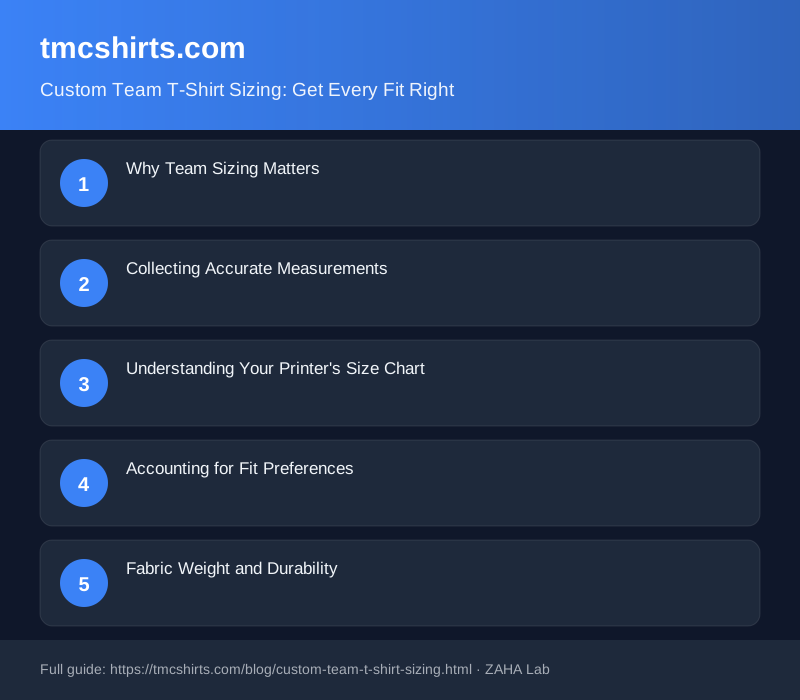
Why Team Sizing Matters
Ordering 20 t-shirts that don't fit properly costs money twice over. Beyond the wasted budget, shirts that are too tight or too loose rarely get worn. For team events or uniforms where the apparel represents your organisation, this is especially critical.
When people feel comfortable in their team gear, they wear it more often and represent your brand better. Poor sizing undermines that entirely. Getting this right is worth the effort upfront.
Collecting Accurate Measurements
Start by asking every team member for their usual t-shirt size in the specific brand or manufacturer you're ordering from. This matters because sizing differs dramatically between suppliers. A medium in one brand might be substantially larger or smaller than a medium elsewhere.
Gather a second data point: ask team members to measure their chest width whilst wearing a fitted t-shirt they already own. This reveals mismatches where someone believes they are a medium but their measurements suggest they are actually a large.
Create a simple spreadsheet with names, stated sizes, and measured chest widths. This reveals patterns and helps identify potential fit issues before ordering. Include columns for fit preference (fitted versus relaxed) and any special requirements.
Understanding Your Printer's Size Chart
Not all medium t-shirts are identical. A 100 per cent cotton shirt wears differently than a 50/50 cotton-polyester blend. A fitted cut differs substantially from a relaxed fit. Quality blank t-shirts from established manufacturers like Gildan come with specific size specifications that your printer will have documented.
Request the exact size chart for the blank shirts your custom printer uses before finalising your order. Compare it against your team members' measurements. If your printer uses Gildan, a medium usually measures around 50.8cm across the chest. Some high-street brands measure closer to 48-49cm. That 2-3cm difference matters when multiplied across an entire team.
Ask your printer whether the shirts will shrink after the first wash. Some blanks shrink slightly, whilst others are pre-shrunk. This affects whether you should size up.
Accounting for Fit Preferences
Team members have different preferences about how clothing should fit them. Some prefer fitted cuts that show off the design, whilst others prefer looser, more comfortable silhouettes. When printing designs, fitted shirts showcase artwork more sharply. Looser fits appeal to more people and suit longer-term wear.
Send the size chart and a feedback request 2-3 weeks before your order deadline. This catches sizing questions early. Some team members might deliberately upsize for comfort; others might stay true to size for a sharper appearance. Getting this feedback in writing prevents complaints after delivery.
Fabric Weight and Durability
Heavier-weight shirts, typically around 180-200 grams per square metre, hold both fit and print quality longer after repeated washing. If your team will wear these shirts regularly or for extended periods, specify a 6-ounce or heavier blank during ordering.
Lighter shirts cost less and work fine for one-off events. Heavier shirts justify their extra cost if people wear them repeatedly. Consider your use case: a conference giveaway might use lighter weight, whilst a team uniform worn regularly should go heavier.
Specialist fabric care products can help maintain print quality and fit over time, especially for heavier-weight shirts.
Common Sizing Mistakes
Do not assume everyone wants standard fit. Account for plus sizes early in discussions. Do not rely on street-level fashion sizing when ordering custom t-shirt blanks; manufacturers follow different standards. Do not order sample shirts in just one size. Order across your full size range so you can verify fit before the main order goes to print.
FAQ
What if team members want to upsize for comfort?
Allow it. A slightly larger shirt worn regularly beats a perfectly fitted shirt left in a drawer. Send the size chart and let people choose their preferred fit.
Should I order replacement or extra sizes?
Yes. Order 5-10 per cent extra in medium and large sizes, which are typically the most common. This covers exchange requests or late team members without reprinting entire stock.
How do I handle international team sizes?
International clothing sizes differ dramatically. Collect chest measurements in centimetres and match them to your printer's specific chart. Do not rely on local sizing terms like "small" or "large" which vary by country.
What is the best fabric for durability?
100 per cent combed cotton at 6-ounce minimum holds shape, maintains print quality and outlasts cheaper synthetics. Performance blends work well if your team is active or needs moisture-wicking properties.
Can I adjust the size breakdown after approval?
Most printers can adjust quantities per size if caught early, but not after printing begins. Double-check your size breakdown 48 hours before production starts.
Gildan Heavy Cotton T-Shirts
Industry-standard blanks for custom printing. Available in multiple colours with pre-shrunk 6-ounce cotton. Perfect for bulk orders.
View on Amazon UKFabric Measurement Tape
Flexible measuring tape for accurate chest and body measurements. Essential for collecting precise sizing data from your team.
View on Amazon UKWoolite Delicates Care
Specialist detergent that preserves print quality and fabric integrity through repeated washing. Extends the life of printed shirts.
View on Amazon UK