Custom Event T-Shirts: Lead Times Explained
Every year, sports teams and event organisers place their custom t-shirt order two weeks before the big day. Most of them pay a premium, accept compromises on quality, or show up in the wrong sizes.
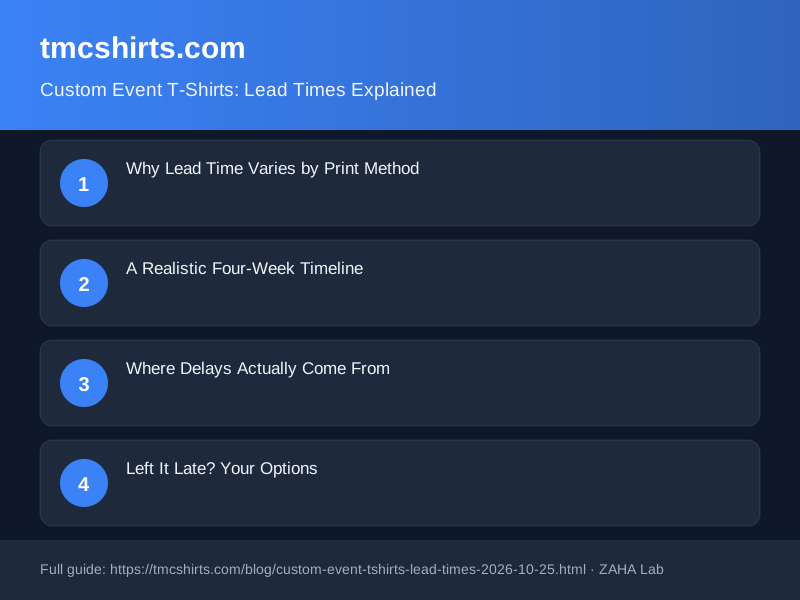
Why Lead Time Varies by Print Method
Three methods dominate UK custom t-shirt printing, and each has its own production clock.
Screen printing pushes ink through a mesh stencil. Colours are vivid, print runs are durable, and the per-unit cost drops sharply above 24 pieces. The catch: setting up screens takes time. Even modest orders need 10 to 15 working days. Above 50 shirts, build in 15 to 20 working days to be safe. Heavyweight blanks like the Gildan Heavy Cotton T-Shirt are the most popular base for screen-printed team runs because they hold ink cleanly and wash without fading after repeated cycles.
DTG printing jets ink directly onto the fabric, similar to an inkjet printer. No screens to set up. Runs of 1 to 20 shirts can leave a printer in 5 to 7 working days, and it handles full-colour photographic designs without a setup surcharge. The cost per unit is higher at volume, but for small charity events or one-off kits it is the practical route.
Heat transfer and vinyl sits in the middle. It works well for squad names and numbers on sports kit. Typical turnaround is 7 to 12 working days depending on quantity. For active-wear orders, the Awdis Just Cool Performance T-Shirt is a popular blank that accepts heat transfer finishes cleanly and wicks moisture during play.
A Realistic Four-Week Timeline
Week 1: finalise the design and collect written approval from everyone who needs to sign it off. This single step causes more delays than production itself.
Week 2: submit artwork, confirm sizes across the group (a Google Form takes ten minutes to set up), and place the order.
Weeks 3 to 4: production and dispatch. If your event is exactly four weeks away, you are on the edge. Three weeks? Ring the printer before ordering online.
Where Delays Actually Come From
Artwork approval is the top culprit. Printers need vector files, SVG, AI, or EPS, or raster files at 300 dpi minimum. A WhatsApp-compressed JPEG adds a correction round that burns 2 to 3 working days before production even starts.
Size confirmation is next. One person who has not replied can stall the whole order. Set a 48-hour response deadline and hold to it.
Stock availability matters too. Core colours of popular blanks sell out during peak season, which runs from April through August. Have a backup colour ready before you commit.
Left It Late? Your Options
Most UK printers offer a 48-hour or 5-day fast-track service at a 20 to 40 per cent surcharge. DTG is the most realistic route for a quick turnaround. Orders above 30 pieces on a rush timeline are harder to place, so call ahead and confirm stock before paying. Blanks such as the Fruit of the Loom Original Full Sleeve T-Shirt are widely stocked across UK suppliers and regularly available for rush production because distributors hold deep inventory of this range year-round.
Affiliate disclosure: this post contains affiliate links. If you purchase through them, TMC Shirts earns a small commission at no extra cost to you.
FAQ
How far in advance should I order custom t-shirts for an event?
For most print methods, 3 to 4 weeks is the safe window. Screen-printed bulk orders need the most lead time, up to 20 working days for large runs. If your event is within two weeks, ask the printer about rush options before placing the order online.
What is the minimum order quantity for custom printed t-shirts?
DTG printers usually accept single-unit orders. Screen printing typically requires a minimum of 12 to 24 identical pieces to justify setup costs. Some specialist team-wear suppliers set minimums as low as 6 pieces for heat transfer work.
Can I get custom t-shirts printed in 48 hours in the UK?
Yes, some printers offer 24 to 48-hour fast-track for DTG orders. Expect a 20 to 40 per cent premium on top of standard pricing, and confirm stock before paying. Quantities above 20 pieces are harder to guarantee at this speed.
Which print method is best for sports team t-shirts?
Screen printing suits large team runs with a simple logo or text design at 12 or more identical pieces. Heat transfer or vinyl works well for individual names and squad numbers. DTG suits small squads or mixed-size orders where quantities do not justify screen costs.
What file format do I need for custom t-shirt printing?
Vector files, AI, EPS, or SVG, are ideal because they scale without quality loss. If you only have a raster file (JPEG or PNG), it must be at least 300 dpi at the intended print size. Avoid images exported from PowerPoint or compressed via messaging apps.