How to Care for Custom Printed T-Shirts
Most custom printed t-shirts crack or fade within a year, not because the print was poor but because of one or two specific washing mistakes. The good news: fixing those habits takes about 30 seconds.
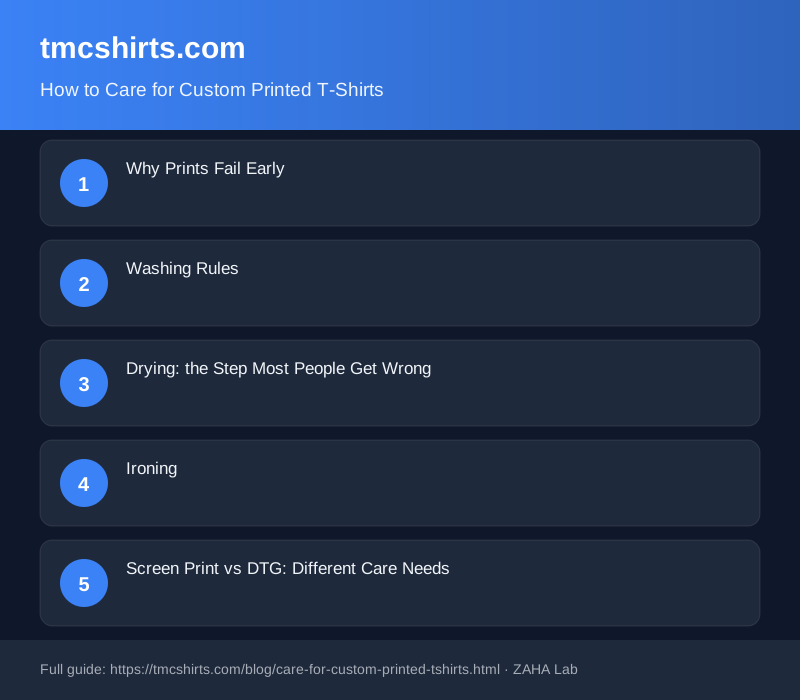
Why Prints Fail Early
Heat and friction are the main culprits. High wash temperatures soften the ink bond with the fabric. The drum of a standard 60°C cycle applies enough heat and mechanical stress to lift screen-printed ink edges within 10 to 20 washes. DTG prints use water-based inks that cure into the fabric fibres, so they handle cold washes well but deteriorate quickly above 40°C.
Harsh detergents speed this up. Biological formulas contain enzymes that break down protein stains, and those same enzymes can attack the binders in some inks. A colour-protect detergent like Persil Colour Protect is a straightforward swap that extends print life noticeably.
Washing Rules
- Turn the shirt inside out before it goes in the machine. This puts the printed surface against itself rather than against other garments.
- Set the temperature to 30°C. Cold is even better for DTG.
- Choose a delicate or gentle cycle. Shorter agitation times mean less friction.
- Avoid washing with heavy items like jeans or towels. Rough fabrics act like sandpaper on ink during the spin cycle. A mesh laundry bag keeps printed tees separated and reduces abrasion.
Drying: the Step Most People Get Wrong
High tumble-dryer heat causes more shrinkage and ink cracking than the wash itself. Air drying on a flat surface or a hanger is the safest option. If you use a tumble dryer, run it on the lowest heat setting and remove the shirts while they are still slightly damp, then leave them to finish drying naturally.
Never dry printed tees in direct sunlight for extended periods. UV exposure fades DTG inks in particular. A shaded spot works fine.
Ironing
Never iron directly onto a printed area. If the shirt needs pressing, turn it inside out and use a cool iron setting, or place a thin cloth between the iron and the fabric. Screen-printed designs have a slight raised surface that can melt or smear under a hot iron in seconds.
Screen Print vs DTG: Different Care Needs
Screen-printed designs sit on top of the fabric as a layer of plastisol or water-based ink. They tolerate mild heat reasonably well but are vulnerable to cracking if the garment is stretched repeatedly. DTG prints sit within the fabric fibre structure, so they feel softer and handle stretching better, but they fade faster at higher temperatures. Both methods benefit from the same cold-and-gentle approach; DTG simply has less tolerance for any heat at all.
Storage
Fold printed shirts with the design facing inward, or hang them. Avoid tight folding that creases a print in the same spot repeatedly, which creates stress fractures in the ink over time. For bulk team kit stored between seasons, a breathable bag beats a sealed plastic box, which traps moisture.
FAQ
How many washes should a quality custom printed t-shirt last?
A screen-printed design from a reputable printer should stay sharp through 50 or more cold washes with correct care. DTG prints typically hold well for 30 to 50 washes under the same conditions, though results vary by fabric type and ink system.
Can I put custom printed t-shirts in a tumble dryer?
Yes, but only on the lowest heat or air-dry setting. High heat is the single biggest cause of premature cracking and shrinkage. Remove shirts while still slightly damp and air-dry the rest of the way.
What temperature should I wash custom printed t-shirts at?
30°C is the standard recommendation. Cold (20°C) is better still, especially for DTG designs. Anything above 40°C risks lifting the ink bond with each wash.
Will dry cleaning damage custom prints?
Dry cleaning solvents can dissolve the binders in both plastisol and water-based inks. Avoid dry cleaning printed garments. Standard cold machine washing is both safer and cheaper.
Why does my DTG print fade faster than the screen-printed one?
DTG ink sits within the fabric fibres rather than on top, making it more sensitive to wash temperature and UV exposure. Screen-printed plastisol sits on the surface and tends to be more heat-resistant. Both last well with cold washes; DTG is simply less forgiving if those habits slip.