How to Order Bulk Custom T-Shirts for Teams
Co-ordinating a team order sounds simple until someone asks about sizing, deadline confusion threatens the budget, and you're left wondering if you'll actually receive the shirts in time. Bulk custom t-shirt printing for teams requires clear planning across design, printer selection, sizing, and timelines.
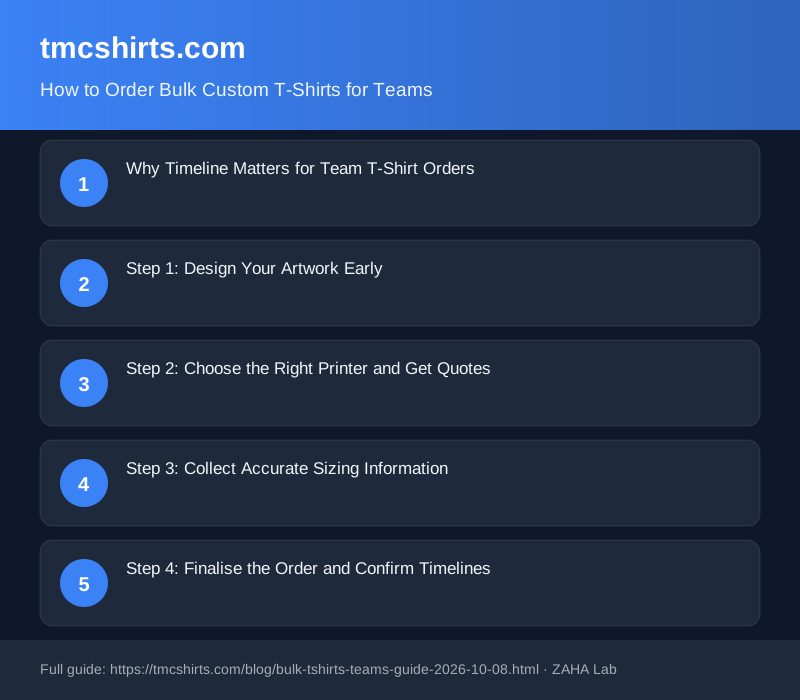
Why Timeline Matters for Team T-Shirt Orders
The difference between a successful team order and a panic-filled scramble is often just poor planning. Many organisations underestimate how long printing actually takes. You might think 500 t-shirts can be printed overnight, but professional bulk orders involve multiple stages: file prep, colour matching, screen setup, printing runs, quality checks, and packing.
A tight timeline creates three problems. First, you'll pay rush fees (often 30-50% extra). Second, print quality suffers when printers rush the work. Third, sizing errors become expensive to fix once garments ship. Start your order process at least 6-8 weeks before your event or campaign launch if you're printing more than 200 units.
Step 1: Design Your Artwork Early
The biggest delay isn't printing, it's design approval. Gather input from stakeholders, create 2-3 design options, and collect feedback within a single round (not iterative back-and-forth over weeks). Your design file needs to be production-ready: correct colour mode (CMYK for print, not RGB), minimum 300dpi resolution, and properly outlined fonts.
If you're doing this in-house, tools like Canva Pro or Adobe Express let non-designers create professional artwork quickly. For complex logos or brand consistency, invest in a professional designer for a day rather than spending three weeks on internal revisions.
Step 2: Choose the Right Printer and Get Quotes
Not all custom t-shirt printers are equal. Screen printing suits high-volume orders (500+) with simple designs, while direct-to-garment printing works better for small runs (10-100) or complex, full-colour artwork. Digital printing offers a middle ground.
Request quotes from at least three printers. Be specific: exact order volume, shirt brand preference (Gildan, Fruit of the Loom, or premium options), colour choices, printing method, and your deadline. Check their minimum order quantities and ask about setup fees. A printer offering free setup might actually have higher per-unit costs.
Look for printers offering bulk discounts. Many drop their per-shirt price at 100 units, 250 units, and 500 units. If you're borderline between quantities, the discount at the next tier might justify ordering extra shirts. You can store them for future events or staff turnover.
Step 3: Collect Accurate Sizing Information
This step takes time but prevents costly mistakes. Send your team a sizing guide with actual measurements for each size (chest width, length, sleeve length). Ask people to measure a shirt that fits well, not guess their usual size. Include options for fitted, regular, and unisex cuts if your printer offers them.
Set a hard deadline for sizing responses at least 4 weeks before your target delivery date. Don't accept late sizing requests once artwork is submitted to the printer; last-minute additions mean reprinting and separate deliveries.
For unisex or oversized styles, consider offering just 2-3 sizes (Small/Medium, Large/XL, 2XL/3XL) to simplify production and reduce the chance of ordering the wrong quantities.
Step 4: Finalise the Order and Confirm Timelines
Once your design is approved and sizing is locked in, submit your order immediately. Confirm with your printer in writing: artwork submission date, approval date, print start date, and guaranteed delivery date. Ask whether they hold the artwork files or if you need to provide them each time.
Build a two-week buffer into your timeline. If your event is 8 December, aim for delivery by 24 November. This gives you time to spot quality issues, address sizing problems if any shirts don't fit, and handle any last-minute changes.
For large orders (1,000+ units), consider requesting a sample shirt before full production starts. Inspect the colour match, print quality, and fit. It costs £10-20 but beats discovering a problem after 1,000 shirts print.
Budget Breakdown for Team Orders
Here's what you're actually paying for. Shirt costs vary by quality and brand (£3-10 per blank). Printing runs £1-5 per shirt for screen printing, £2-8 for direct-to-garment, depending on design complexity and order volume. Setup fees typically range from free to £40-80. Shipping and handling add £0.50-2 per shirt.
For 100 premium blank t-shirts with a two-colour screen print design, expect £400-700 total (£4-7 per shirt). For 500 units, you might hit £2-3 per shirt with volume discounts, bringing your total to £1,000-1,500. These figures exclude design costs if you hire a professional.
Common Mistakes to Avoid
Don't assume everyone in your team wears the size they claim. Build in 5-10% extra inventory for size exchanges. Don't wait until two weeks before your event to place the order; this triggers rush fees and limits printer availability. Don't use RGB colour files for screen printing; colours shift unexpectedly without proper CMYK conversion.
Avoid printers who won't provide a written quote or timeline. Avoid low-cost options that seem too good to be true; they usually involve thick, uncomfortable blanks or poor-quality printing. Finally, don't assume your printer stores files indefinitely. Keep copies of your approved artwork yourself.
Scaling Across Multiple Sizes and Colours
For orders with multiple shirt colours or design variations, the timeline often extends. Each colour combination might require separate screen setups. If you're offering team members a choice between navy and black shirts, with three different designs, that's potentially six separate print runs. Consolidate choices to reduce complexity. A single design in two colours is much faster than two designs in multiple colours.
If you're using heat transfer vinyl supplies for smaller DIY additions (like individual names or numbers), plan this as a separate step after bulk shirts arrive, not as part of the main order.
The Timeline at a Glance
Week 2-3: Sizing data collected, printer selected, order placed
Week 3-4: Print production begins
Week 4-5: Quality checks and packing
Week 6: Delivery and distribution
Total: 6 weeks (4 weeks minimum in urgent cases)
Where to Buy or Print
For in-house teams wanting DIY options, Cricut Explore 3 lets you cut and heat-press custom designs onto blank t-shirts at small scale. For bulk orders, work directly with established printers, or use platforms that connect you to local production partners. Always request samples and verify turnaround times in writing before committing.
FAQ
How far in advance should we order bulk team t-shirts?
Aim for 6-8 weeks minimum. This allows time for design approval (2 weeks), sizing collection (1 week), quote review (1 week), production (2-3 weeks), and delivery (1 week). Shorter timelines are possible but trigger rush fees and limit your printer choices.
What's the minimum order quantity for custom t-shirt printing?
Most bulk printers accept orders from 24-50 units minimum, though some screen printers require 100+. Direct-to-garment printing often has lower minimums (10-25 units). Check with individual printers as requirements vary.
Can we order different designs for different team members?
Yes, but it adds complexity and cost. Each unique design typically requires separate production, which extends your timeline by 1-2 weeks and may add setup fees. Stick to one primary design with minimal personalisation if you're time-constrained.
What if our team sizes don't match the available shirt sizes?
Confirm the printer's size range before ordering blanks. Most offer XS through 3XL or 4XL. If you have multiple XXL or XXXL requests, clarify whether these are included or cost extra. Tall or oversized options may require a premium blank, increasing per-unit costs.
How much does bulk t-shirt printing actually cost?
Costs vary widely. Budget £3-10 per blank shirt, £1-8 per print job, plus setup fees (£0-80) and shipping. For 100 units, expect £400-800 total. For 500 units with volume discounts, you might pay £1,000-1,800. Get written quotes from at least three printers to compare.